




The Department of Labor just finalized the rule employers have needed for twenty years. PBMs serving large self-funded plans will now have to show the money, in dollars, by drug, before you sign and every six months after. And you get to check their work.
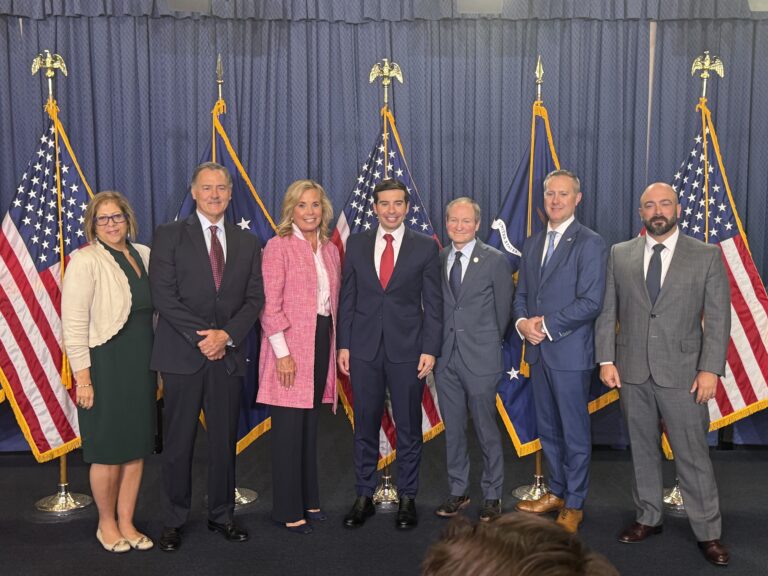
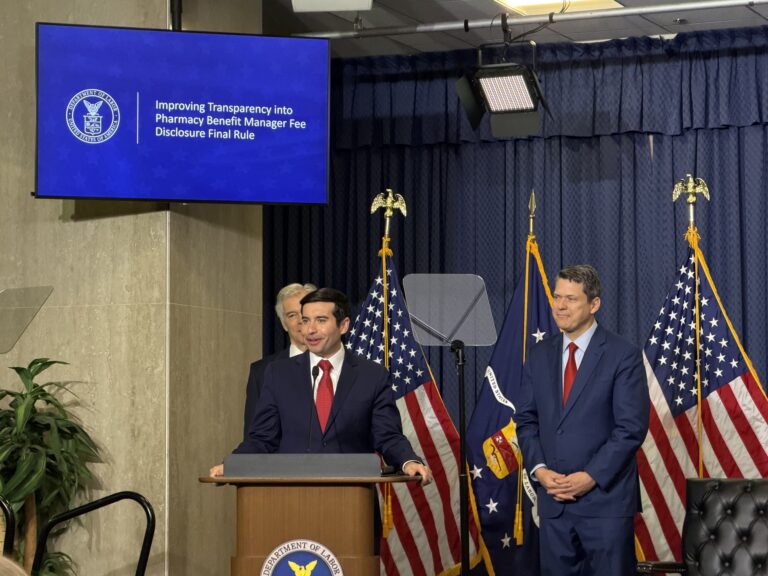
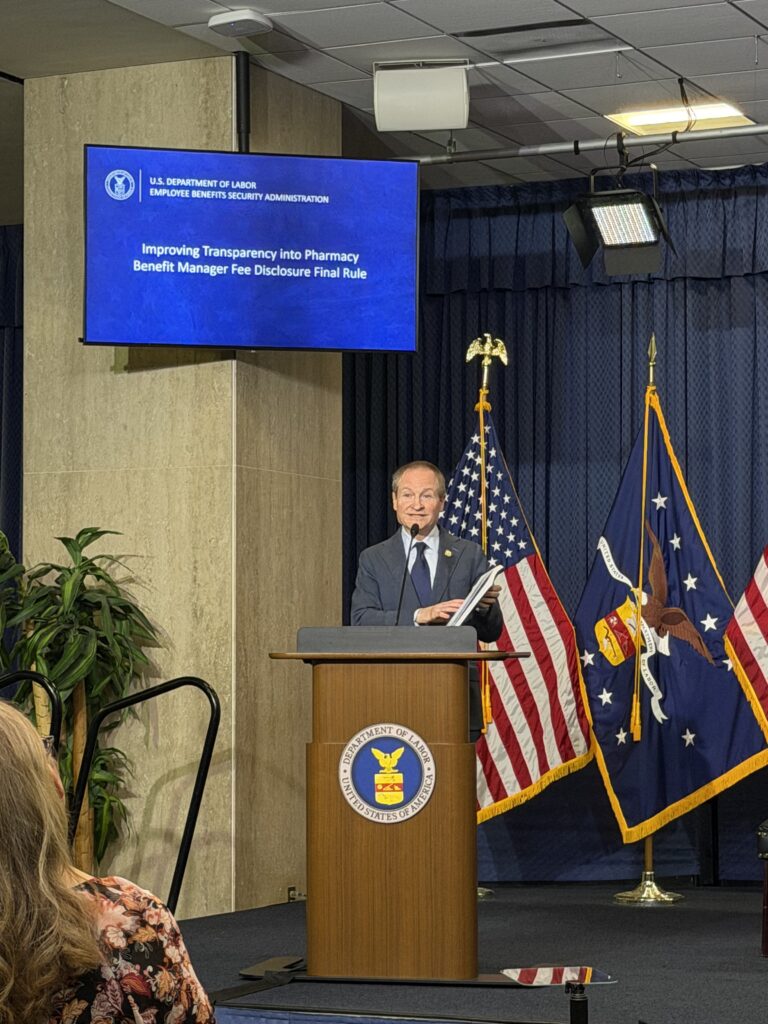
I was in the room at DOL yesterday when “Improving Transparency into Pharmacy Benefit Manager Fee Disclosure” was unveiled. I watched people who have been fighting this fight for years, including my podcast co-host Julie Selesnick on the panel, see it cross the finish line. Here is what it does, who it hits, and what you should be doing about it right now.
The short version: if you run a self-funded plan with 100 or more participants, your PBM contract is about to become a lot harder to hide things in.
Who It Covers
The rule applies to self-funded group health plans sponsored by employers with 100 or more employees, or plans with 100 or more participants. Fully insured plans are carved out for now, and so are plans sponsored by companies in the drug supply chain.
On the other side of the table, it hits anyone who contracts with your plan to provide pharmacy benefit management services and expects $1,000 or more in compensation. Calling yourself something other than a PBM does not get you out of it. If your TPA, carrier ASO, level-funded vendor, MEWA, or coalition holds the contract and subcontracts the PBM, the entity holding the contract owns the disclosure obligation.
Brokers and consultants who are PBMs or PBM affiliates are covered too. That matters. DOL explicitly called out consultants getting paid per script or per employee by the PBMs they are supposed to be evaluating. Independent brokers and consultants are not in this rule, but they still owe disclosures under the statute itself, ERISA 408(b)(2)(B), as amended by the Consolidated Appropriations Act, 2026.
What You Will Finally See
At least 90 days before a renewal or extension, and before any new contract, the PBM has to put this in writing:
- Direct compensation by service. Bundled fees have to be unbundled with a good faith allocation to each service.
- Every rebate, fee, alternative discount, and other manufacturer payment, by drug on the formulary, split between what the plan gets and what the PBM keeps.
- Spread compensation by NDC: what the plan pays, what the pharmacy gets, and the difference, by retail, mail, and specialty channel.
- Copay clawbacks and every other retroactive pharmacy recoupment, with the number of transactions.
- Price protection and inflation protection deals with manufacturers, and who keeps that money.
- Formulary placement incentives, plus the cheaper therapeutic equivalents and biosimilars that were left off when the PBM keeps a manufacturer payment, and why.
- The net price per fill for every drug on the formulary, by channel, after all manufacturer money.
- Steering arrangements that push members to PBM-owned pharmacies.
- What they get paid if you terminate, and a catch-all for any other compensation, with the payer named.
- Whether they or an affiliate act as an ERISA fiduciary.
The part that changes everything: compensation must be stated as a monetary amount. Not “AWP minus.” Not a formula. Dollars. Generic jargon without a definition does not count as disclosure.
Then every six months (quarterly if you ask), within 30 days of the period closing, they report what they actually received. If any category runs 5% or more over the estimate, they have to tell you by how much and why. If they want to change the formulary in a way that moves their manufacturer revenue 5% or more, they have to tell you in advance, and remind you that you can terminate.
Trust, but Now You Can Verify
Disclosure without verification is a press release. This rule gives plans a real audit right, at least once a year, and it shuts down the games PBMs have played for years.
- You pick the auditor. The PBM cannot veto or limit your choice.
- They have to hand over claims and transaction-level data, plus their contracts with pharmacies, manufacturers, and rebate aggregators.
- No limits on location, time period, or number of records. No “come to our office and take handwritten notes.”
- They confirm your request within 10 business days and deliver within 60 days.
- You pay the auditor. They pay to produce the data.
- Offshore rebate aggregators and GPOs are pulled in as agents. Moving the money one entity over no longer hides it.
Confidentiality agreements are allowed, but they cannot stop you from sharing with your consultant, your counsel, or state and federal regulators.
If a PBM will not disclose or will not cooperate with an audit, the fiduciary has a path: request the fix in writing, report the PBM to DOL if it is not corrected within 90 days, and document a prudent decision on whether to stay or terminate. Do that, and the fiduciary is protected. The PBM is not.
The Clock, and What This Rule Does Not Do
The rule takes effect 60 days after it publishes in the Federal Register. It applies to plan years beginning on or after July 1, 2027. With the 90 day advance disclosure requirement, a July 1, 2027 renewal means you should see these disclosures by early April 2027. That is about five months from now.
Until then, DOL is running a good faith enforcement policy for every covered service provider under 408(b)(2)(B), PBMs and TPAs included. Good faith is not a free pass. If your vendors are not disclosing compensation today, that is a conversation to have today.
Let’s be clear about the limits. This rule does not ban spread pricing, and it does not force rebate pass-through. The 100% pass-through requirement Congress passed in the CAA, 2026 does not hit until plan years beginning on or after August 3, 2028. This rule does not cover fully insured plans or small plans. And DOL’s own cost analysis is modest: roughly $818 million a year shifting back to plans and members in its central estimate.
Transparency does not save anyone a dime by itself. It hands fiduciaries the facts. What they do with them is where the money is.
What To Do Now
- Pull your PBM contract and find the renewal date, the auto-renew language, and the notice window. Work backward 90 days.
- Find out who actually holds your pharmacy contract. If it is your TPA or carrier, they now own these disclosures.
- Ask your broker or consultant, in writing, what they receive from any PBM, rebate aggregator, or affiliate. If the answer is anything but zero, you need the number.
- Review your audit clause now. Any language limiting auditor choice, records, location, or lookback is out of step with the rule.
- Build the process to actually read the disclosures: benchmark them, compare bids, and document your decisions. The fiduciary who gets the data and does nothing with it is in a worse spot than before.
This is the work we do every day at BenefitsDNA®. Employers and their members are paying for this benefit. They deserve to know where every dollar goes, and now they can.
Read the Final Rule: Improving Transparency into Pharmacy Benefit Manager Fee Disclosure, Final Rule
Justin D. Leader, M.S.
President & CEO